
Wooden Jewelry Boxes — Custom Manufacturing from China
Get premium wooden jewelry boxes custom-made for your brand. Factory-direct pricing, low MOQ, fast turnaround. Trusted by 300+ jewelry brands across 30+ countries.
Featured Wooden Jewelry Box Collections


Wooden Jewelry Box Design Gallery
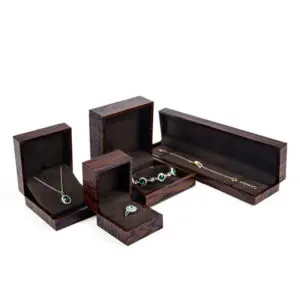
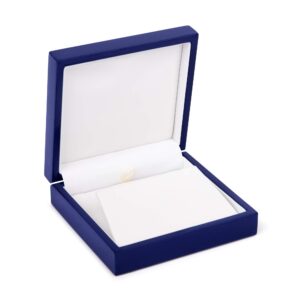


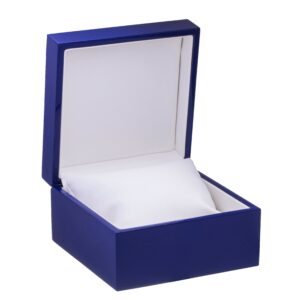


Why Choose On the Way for Wooden Jewelry Boxes
Built for brands that demand quality, customization, and speed.
Factory-Direct Pricing
Own manufacturing means zero middleman markups. Get best-in-market pricing on every wooden jewelry box order.
50-Piece Minimum Order
Start small with our low MOQ. Perfect for indie brands, boutiques, and new collections launching wooden jewelry boxes.
Unlimited Custom Designs
No design limits. Customize every detail of your wooden jewelry box—wood type, finish, hardware, interior.
Multi-Stage Quality Control
Professional QC team inspects each wooden jewelry box at production stages. 6,500+ projects delivered flawlessly.
FSC-Certified Eco-Materials
Premium FSC-certified wood and recycled materials. Create sustainable wooden jewelry box packaging aligned with brand values.
7-Day Sample Turnaround
See your design fast. Samples ready in 2–3 weeks for standard turnaround. Expedited 7-day options available upon request.
Wooden Jewelry Box Solutions for Every Business Model
From independent designers to established brands—discover how jewelry businesses worldwide use our custom wooden u003ca href=u0022/jewelry-boxes/u0022u003ejewelry boxu003c/au003e options to elevate packaging and customer experience.
Professional Branding on Startup Budget
You've designed beautiful pieces, but generic packaging undermines your brand identity. Mass-produced options require minimum orders of 5,000+ units, making them financially impossible for emerging jewelry designers and labels.
Custom wooden jewelry boxes with your logo at low MOQ—starting at just 50 units. Elevate your brand's first impression without overcommitting inventory or capital.
Premium Unboxing Experiences for Retailers
Your high-end clientele expects exceptional presentation at every touchpoint. Standard packaging diminishes your brand's perceived value and fails to create memorable, shareable unboxing moments that build loyalty and encourage repeat purchases.
Curated rigid wooden boxes and custom display trays that reflect your luxury positioning. Create premium unboxing experiences that encourage repeat purchases, referrals, and social sharing.
Scalable Packaging for Global Brands
Managing consistent, branded packaging across multiple distribution channels and countries is complex. You need reliable supply, factory-direct pricing, and a partner experienced with your scale across 30+ markets.
Private-label wooden jewelry box solutions with dedicated account managers serving 300+ established brands globally. Achieve significant cost reduction while maintaining complete quality consistency and reliable on-time delivery.
Lightweight Elegance for E-commerce Growth
Online buyers expect premium unboxing but you need packaging that protects without inflating shipping costs. Balancing elevated design with logistics efficiency and customer satisfaction is challenging at scale.
Lightweight velvet pouches and compact wooden jewelry boxes that protect products and delight customers. Create memorable unboxing moments that drive repeat orders, reviews, and referrals.
Unified Branding Across Multiple Locations
Standardizing packaging and displays across multiple store locations is logistically complex and expensive. You need bulk solutions that maintain consistent branding while staying cost-efficient and reliable.
Bulk custom wooden jewelry boxes, branded paper bags, and display trays in one coordinated solution. Unified presentation strengthens recognition and simplifies vendor management across locations.
Materials for Premium Wooden Jewelry Boxes
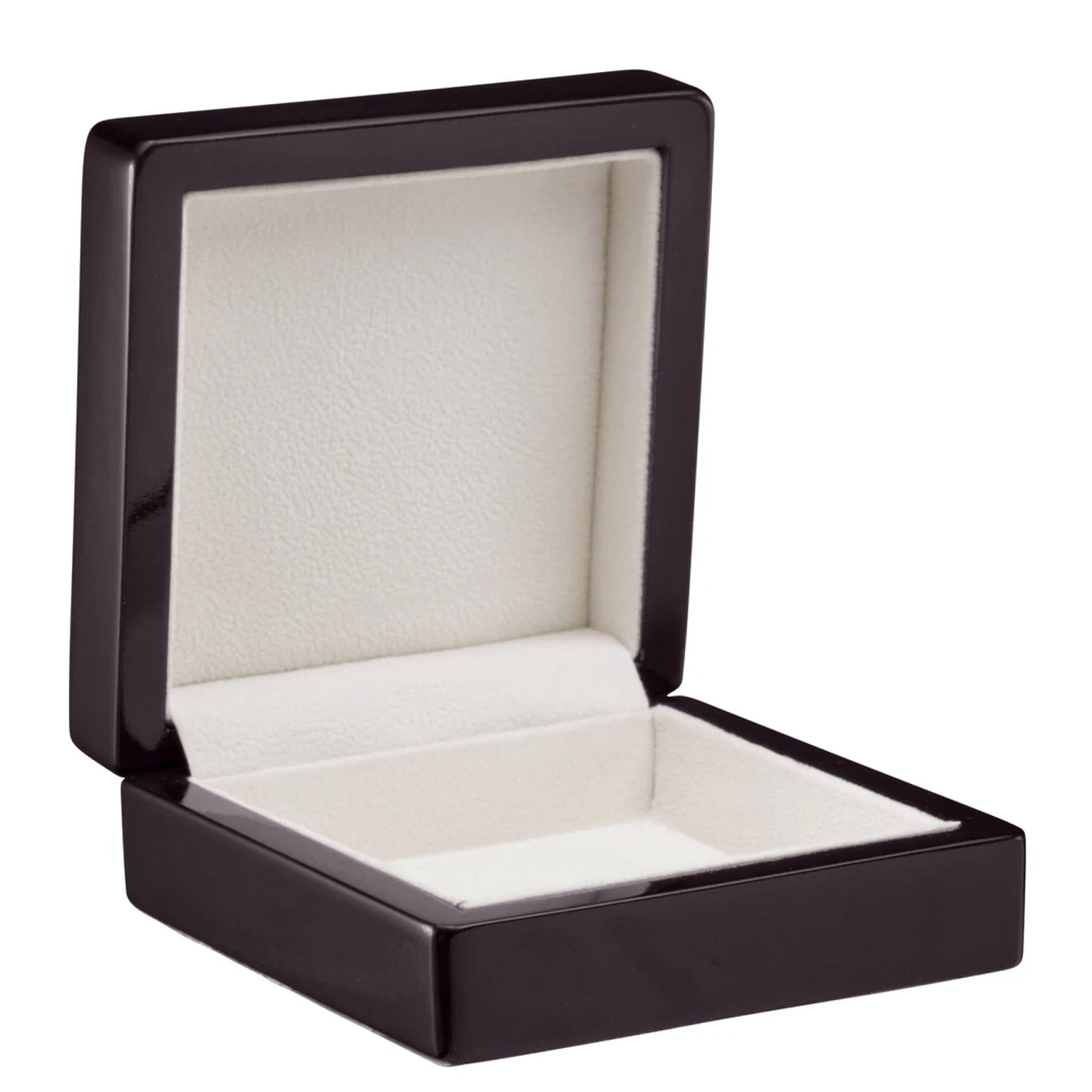
Wood Veneer
Premium real-wood veneer (walnut, oak, mahogany) applied over solid wood base, offering authentic grain patterns and rich color depth. Provides durability and natural beauty for luxury wooden jewelry box construction.

Velvet Lining
Soft, plush velvet (cotton or polyester blend) interior provides luxury feel and jewelry protection. Reduces scratching, available in jewel tones and neutrals. Enhances premium perception of wooden jewelry box interiors.

Recycled Cardboard
FSC-certified recycled kraft cardboard construction offers sustainable packaging solution without compromising strength. Lightweight yet sturdy, ideal for eco-conscious brands seeking sustainable wooden jewelry box alternatives.
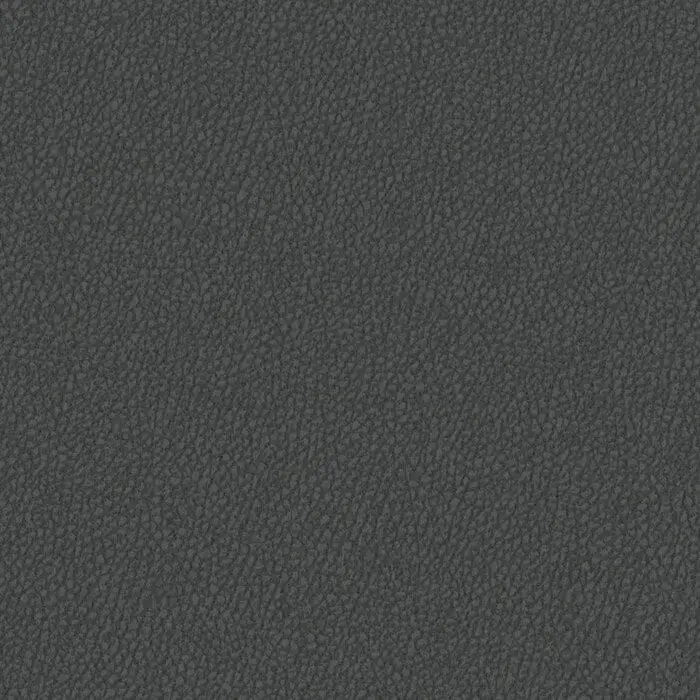
Linen Lining
Natural linen fabric lining combines elegance with functionality. Its tight weave protects jewelry from scratches while offering sophisticated, breathable interior for premium wooden jewelry box designs.
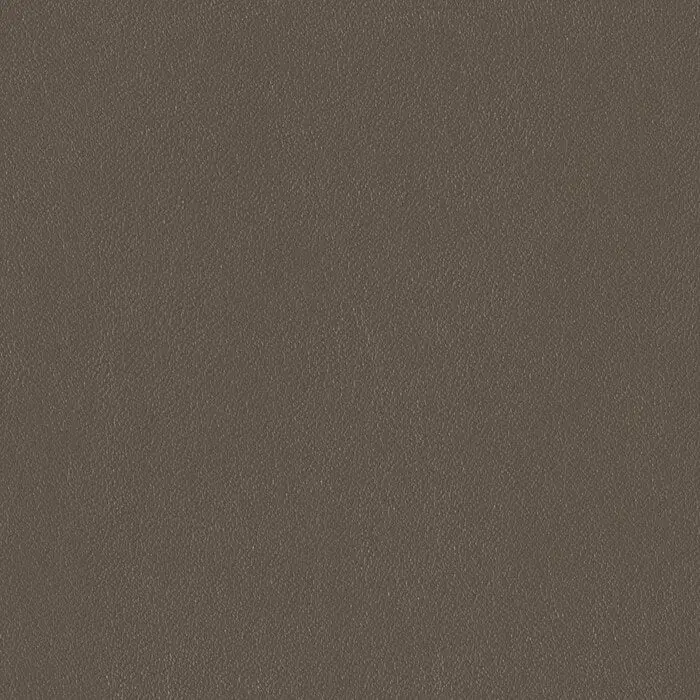
Microfiber Lining
Microfiber provides superior softness and durability. Resistant to staining and easier to clean than velvet, while maintaining luxury appearance. High performance interior for professional wooden jewelry box manufacturers.

Eco-Certified Materials
FSC-certified paper, recycled plastic components, and biodegradable options align with sustainable luxury. Combines environmental responsibility with premium presentation for forward-thinking jewelry brands choosing sustainable wooden jewelry box solutions.
Customization Processes for Premium Wooden Jewelry Boxes
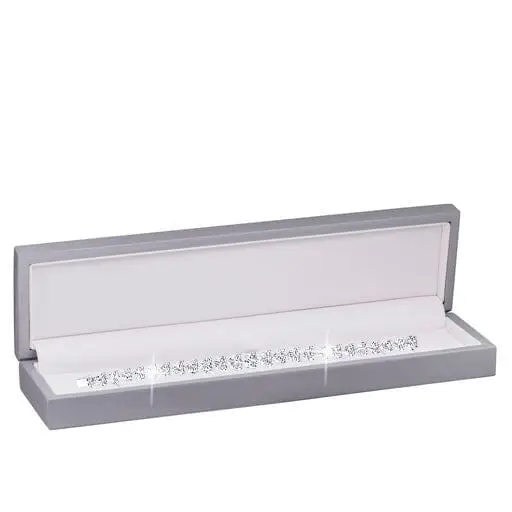
Screen Printing
High-definition printing of logos, patterns, and custom artwork directly onto wooden surfaces. Creates vibrant, durable designs that resist fading and wear, perfect for branded wooden jewelry boxes.
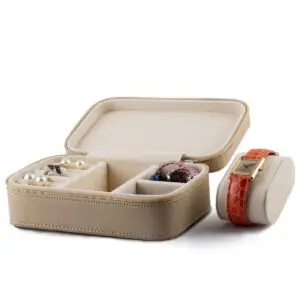
Laser Engraving
Precision etching of logos, text, and intricate patterns into wood using advanced laser technology. Delivers permanent, elegant details without ink, ideal for luxury wooden jewelry box branding.
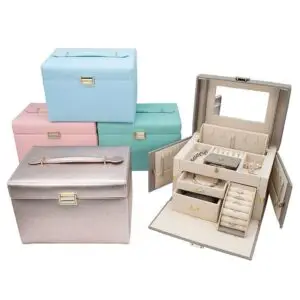
Lacquering u0026 Finishing
Multi-layer protective coating applied to wooden jewelry boxes for high-gloss shine, water resistance, and durability. Enhances natural wood grain while providing a premium luxury feel.
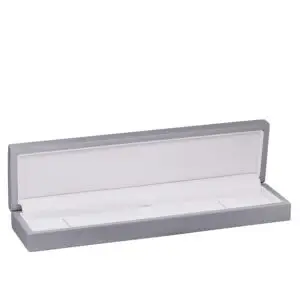
Embossing
Raised or recessed 3D texturing technique that creates tactile patterns and designs on wooden surfaces. Adds depth and premium appeal to your custom wooden jewelry box.
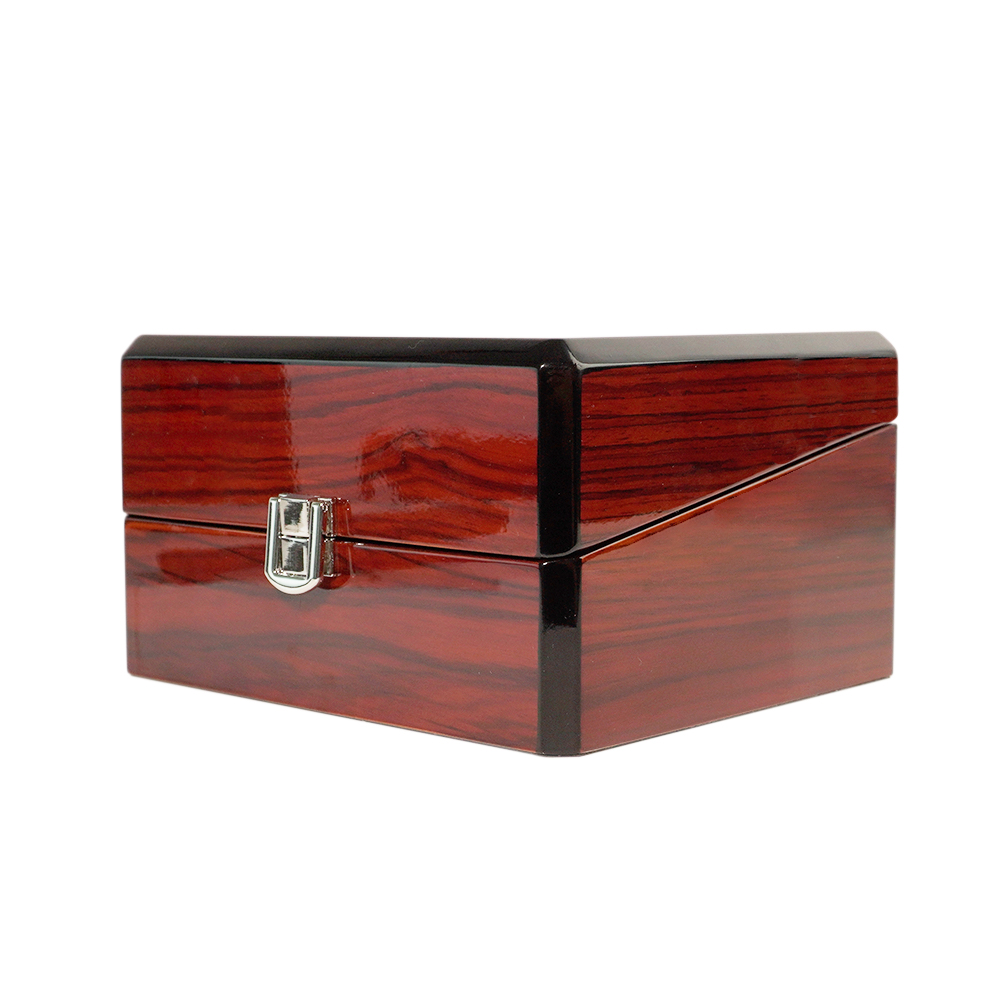
Magnetic Closures
Integrated magnetic hardware embedded into wooden jewelry boxes creates seamless, secure closure without visible mechanisms. Delivers a luxury unboxing experience with effortless, satisfying open-and-close functionality.
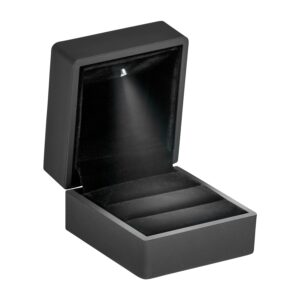
LED Lighting
Battery-powered LED inserts illuminate the interior of wooden jewelry boxes, creating dramatic presentation effects. Ideal for premium displays and luxury retail experiences that showcase jewelry contents.
Wooden Jewelry Box Hardware u0026 Finishing Options

Metal Hinges
Choose from soft-close, self-closing, or traditional hinges in nickel, brass, or stainless steel. Perfect for luxury boxes that require smooth, silent operation and durability for years of use.

Premium Linings
Select from velvet, satin, microfiber, or cotton linings in custom colors. Enhances tactile luxury and protects jewelry while creating a memorable unboxing experience for your customers.
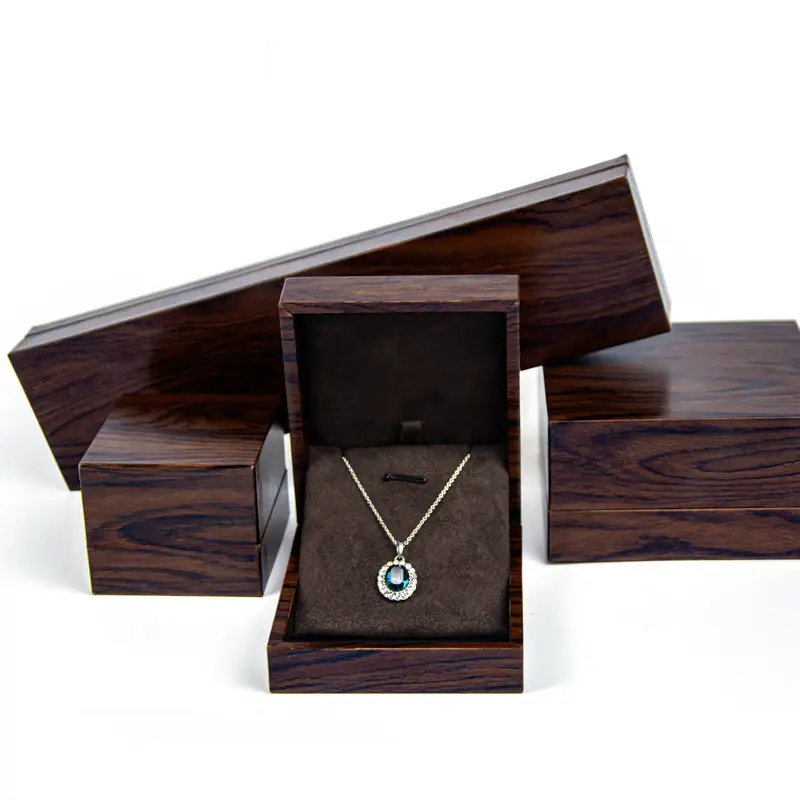
Mirror Inserts
Add fitted or tilted mirrors to your wooden jewelry boxes for increased functionality. Customers appreciate the convenience of checking jewelry presentation without removing items from the box.

Woven Labels
Embroider your brand logo or messaging directly onto the interior lining or exterior wood. Reinforces brand identity and creates a premium, personalized touch that distinguishes your packaging.

Security Locks
Add keyed or combination locks in various finishes for enhanced security and luxury appeal. Ideal for high-value jewelry and gift boxes requiring additional protection and exclusive presentation.

Interior Dividers
Customize interior compartmentalization with foam-lined dividers or adjustable trays to organize jewelry. Prevents movement during shipping and elevates the premium presentation of your collection while maximizing functionality.
On the Way: Wooden Jewelry Box Experts
Founded in 2007, On the Way Packaging built its reputation on a singular principle: quality defines survival. We began as a custom wooden jewelry box manufacturer for boutique brands and independent designers, and we’ve grown into a trusted partner for 300+ jewelry brands across 30+ countries. Every wooden jewelry box, leather pouch, and display case we create reflects our commitment to exquisite craftsmanship.
From our 1,200 m² factory in Dongguan, China, our team of 220+ specialists has completed over 6,500 custom projects. We deliver factory-direct pricing, low minimum orders, and full customization—whether you’re a startup designer or an established luxury brand. Every wooden jewelry box undergoes multi-stage quality control to ensure flawless execution and on-time delivery.
What sets us apart is our hands-on approach: dedicated account managers guide each project from sampling to production, eco-friendly materials (FSC-certified paper, recycled options) meet sustainability standards, and our factory-direct model eliminates middleman costs. We don’t just manufacture wooden jewelry boxes—we’re partners in your brand’s first impression, believing that exceptional packaging elevates how jewelry is perceived and remembered.
Wooden Jewelry Box Manufacturing Expertise — 4 Core Capabilities
Fully Custom Wooden Jewelry Box Design
Tailor every aspect of your wooden jewelry boxes to your brand—from material selection and dimensions to finishes and hardware. We work with startups and established brands alike, with flexible MOQs and white-label options that scale with your growth.
- Complete customization on materials, dimensions, finishes, and branding
- Low MOQ—from small brands to large enterprises
- Private-label and OEM white-label programs available
- Dedicated account manager guides your project

Sustainable Materials for Premium Boxes
Source premium wooden jewelry boxes from FSC-certified, sustainably harvested materials. We pair eco-conscious production with luxury aesthetics—recycled paper options, reusable packaging, and durable finishes that reflect your brand values and appeal to conscious consumers.
- FSC-certified sustainable wood and recycled paper options
- Premium aesthetics without environmental compromise
- Reusable and eco-friendly material combinations available
- Materials tested for durability and beauty

Multi-Stage Quality Control on Every Box
Every wooden jewelry box passes through our multi-stage quality control system—from material inspection to final packaging. Our dedicated QC team ensures consistency, durability, and flawless finishes across every unit, meeting international standards and your exacting specifications.
- Multi-stage QC inspections from raw materials to final box
- 100% quality checks at critical production milestones
- Compliance with international packaging and safety standards
- Consistent results across all order sizes
Fast Sampling — From Design to Approval
Move from concept to approval in days, not weeks. Our rapid sampling process lets you iterate on designs, materials, and finishes quickly—keeping your product launches on schedule and your feedback loop tight with our dedicated account manager.
- Rapid prototyping and sampling turnaround (days, not weeks)
- Quick design iteration with material and finish options
- Accelerated timeline keeps your product launch on track
- Direct feedback loop with your dedicated account manager

On the Way Wooden Jewelry Boxes vs. Traditional Suppliers
See why u003ca href=u0022/u0022u003eOn the Wayu003c/au003e’s factory-direct approach outperforms traditional packaging suppliers across pricing, speed, flexibility, quality, sustainability, and service.
← 左右滑动查看 →
Wooden Jewelry Box Production Process
From design to delivery, we ensure quality at every step
Design Review u0026 Sampling
Collaborate with our design team to refine your wooden jewelry box specifications, materials, and finishes. We produce custom samples for your approval.
Material Sourcing u0026 Prep
We source premium sustainable materials—FSC-certified wood, recycled papers, eco-friendly finishes. Our team prepares all materials and components for production.
Printing u0026 Decoration
Your wooden jewelry box receives custom printing, embossing, UV coating, or lacquer finishes. Advanced equipment ensures consistent, vibrant branding on every unit.
Multi-Stage Quality Control
Every wooden jewelry box passes our rigorous multi-stage QC process: material checks, finish inspection, assembly verification, and function testing before shipping.
Packing u0026 Assembly
Boxes are carefully assembled, padded, and packed in protective materials. All items are labeled, organized, and prepared for international shipment to your location.
Global Shipping u0026 Delivery
Your order ships via DHL, FedEx, or sea freight based on volume and timeline. We track every shipment and provide regular updates until arrival.
How to Order Your Custom Wooden Jewelry Boxes
From technical pack to delivery—we handle every step with dedicated support and factory-direct quality.
Submit Your Technical Pack
Submit technical specifications including materials, dimensions, finishes, and branding requirements. Our account managers review your pack within 48 hours and provide detailed feedback.
Receive Free Samples
We produce complimentary samples in your chosen materials and finishes. Standard samples arrive in 2–3 weeks; expedited samples in 7–10 business days for an additional fee.
Approve Design u0026 Refinements
Review samples with your team, request any design refinements, and approve final specifications. Our designers ensure every detail matches your brand vision.
Place Your Bulk Order
Finalize your order quantity, confirm timelines, and receive a detailed production schedule. Our multi-stage QC begins immediately upon order confirmation.
Ensure On-Time Delivery
Monitor production progress through real-time updates from your dedicated account manager. We guarantee on-time delivery with 100% quality assurance on every unit.
Quality Certifications for Premium Wooden Jewelry Boxes

Client Testimonials: Wooden Jewelry Box Success Stories
On the Way cut our wooden jewelry box costs by 35% and delivered samples in half the time. We launched our holiday collection two months early. Their quality control is meticulous—zero defects on 10,000 units.
As an indie designer, their low MOQ for wooden jewelry boxes let me test 5 wood finishes on 500 pieces each. No pressure to over-commit. My boxes became my biggest brand asset, and their team treated me like a major account from day one.
We’ve been ordering wooden jewelry boxes from On the Way for three years—18,000+ units across 8 SKUs. Consistent quality, always on-time delivery, and their account manager catches design issues before production starts.
Wooden Jewelry Box Manufacturing — Frequently Asked Questions
Everything you need to know about ordering custom wooden jewelry boxes from our factory
What is your minimum order quantity for wooden jewelry boxes?
How long does it take to sample a wooden jewelry box?
Are wooden jewelry boxes eco-friendly?
What is your pricing model for custom wooden jewelry box orders?
How do you protect our brand and custom designs on wooden jewelry boxes?
What payment terms do you offer for custom wooden jewelry box orders?
Do you offer white-label or private-label wooden jewelry boxes?
How do you ensure quality on every wooden jewelry box order?
The Ultimate Wooden Jewelry Box Buyer’s Guide
Master wooden jewelry box selection with expert sourcing criteria, material specifications, manufacturer evaluation frameworks, and proven strategies to avoid costly mistakes when selecting factory partners.
1. What is a Wooden Jewelry Box?
Over 6,500 custom projects reveal that wooden jewelry boxes are rigid, protective cases crafted from solid or engineered wood, designed to store and present fine jewelry while safeguarding pieces during retail display and customer ownership. Unlike flat-pack alternatives, wooden boxes provide tactile luxury—the heft, grain texture, and warmth of natural materials—that reinforce perceived value at the moment of unboxing.nnSolid hardwoods like maple, walnut, and ash represent the durability distinction: these woods resist warping across 10+ years of use, while metal-lined interiors (typically microfiber or velvet) protect against tarnish and scratches. A properly manufactured wooden box transforms cost investments into brand loyalty, as repeat purchases increase when packaging quality reflects jewelry quality.nnFSC-certified timber and recycled materials increasingly meet corporate ESG mandates that luxury brands enforce in their supply chains. Wood biodegrades within 5–10 years, fundamentally distinguishing wooden boxes from single-use plastics and cardboard alternatives—a material advantage that aligns packaging sustainability with luxury brand values.nnAcross North America, Europe, and Southeast Asia, consumers associate wooden boxes with exclusivity: a crafted, reusable vessel signals that jewelry inside merits permanence and care. This perception justifies premium retail margins and strengthens brand positioning—luxury houses rely on wooden packaging as a tangible extension of brand identity.
2. Evolution u0026 History of Wooden Jewelry Box
Wooden jewelry boxes emerged in the 17th and 18th centuries as hand-crafted luxury items, typically produced by master artisans who combined fine woodworking with velvet interiors and ornamental hardware. These heirloom pieces reflected a brand’s status and craftsmanship, establishing a legacy that positioned wooden boxes as inherently premium packaging.nnThe 2010s retail revolution introduced the ‘unboxing experience’ as a critical brand differentiator, accelerating demand for distinctive packaging that told a story. Simultaneously, sustainability became non-negotiable: brands increasingly sourced FSC-certified and reclaimed wood to align with consumer values, transforming wooden jewelry boxes from luxury curiosities into expected touchpoints for conscious retailers. This shift forced traditional artisans and emerging manufacturers alike to balance heritage aesthetics with scalability.nnModern factory production scaled wooden jewelry box manufacturing while preserving quality—companies now manage MOQs from 100 units and deliver custom designs with multi-stage QC oversight. Wooden boxes retain their premium positioning because they command 1.5–3x the cost of rigid cardboard alternatives, yet justify that investment through perceived durability, eco-credentials, and the storytelling leverage they provide retailers. The transition from purely handcrafted to semi-automated production democratized access for independent designers and boutique retailers without eroding the luxury perception.
3. Types of Wooden Jewelry Boxes
Wooden jewelry boxes are engineered in five primary types to match specific jewelry categories and brand positioning. Selecting the right configuration protects products while reinforcing unboxing experience, reducing damage claims and returns. Each type offers distinct interior layouts and capacity ranges.
| Type | Dimensions (mm) | Capacity | Best For |
|---|---|---|---|
| Single-Ring | 50×50×55 | 1 ring | Engagement rings |
| Necklace | 85×85×75 | 1 necklace + pendant | Gift sets |
| Bracelet | 90×90×60 | 1 bracelet | Fashion jewelry |
| Watch | 100×100×80 | 1 watch | Premium watches |
| Multi-Compartment | 150×120×120 | 5–10 pieces | Complete sets |
| Custom-Shaped | Brand-specific | 2–8 pieces | Luxury brands |
Single-Ring Boxes
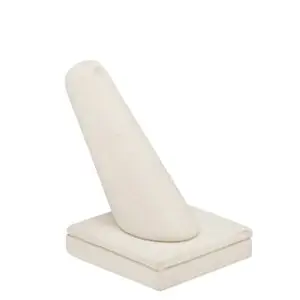
Single-ring boxes (50×50×55 mm) feature a compartmentalized velvet interior with one pillar or split-ring display. Ideal for engagement rings and statement pieces, they cost under 2 USD per unit, making them cost-effective for high-volume retailers and direct-to-consumer brands.
Necklace u0026 Pendant Boxes

Pendant boxes (85×85×75 mm) include a suspended hook or T-bar pillar preventing tangling. They accommodate 24-inch chain lengths and allow custom padding for branded inserts, ideal for gift sets pairing necklaces with matching earrings.
Bracelet u0026 Watch Boxes

Bracelet boxes feature an open tray or central pillow (90×90×60 mm), while watch boxes use rigid magnetic-closure designs (100×100×80 mm) with microfiber layers. Premium watch brands use these to convey luxury positioning and prevent metal scuffing.
Multi-Compartment Chests

Multi-compartment wooden chests (150×120×120 mm) hold 5–10 pieces with 4–12 interior sections: necklace hooks, ring pillars, earring slots, and bracelet trays. At 4–8 USD per unit, they justify higher prices through expanded capacity and complete accessory wardrobes in a single case.
Custom-Shaped Specialty Boxes
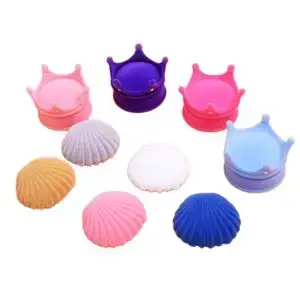
Custom-shaped boxes (heart, hexagon, logo silhouettes) require MOQs of 500–1,000 units but deliver unparalleled differentiation. Lead times are 6–8 weeks for tooling; factory-direct manufacturers manage samples in 2–3 weeks, ideal for luxury brands and independent designers.
4. Materials u0026 Construction of Wooden Jewelry Boxes
Material selection defines wooden jewelry box performance and luxury perception. Wood species, finish, lining, and hardware determine durability, appearance, cost, and sustainability. Premium sourcing and multi-stage finishes extend longevity.
| Wood Species | Durability | Grain u0026 Appearance | Cost Tier | Sustainability |
|---|---|---|---|---|
| Walnut | High | Fine, dark brown | Premium | High (FSC available) |
| Mahogany | High | Rich reddish, straight grain | Premium | Moderate (regulated) |
| Oak | Very High | Prominent open grain | Mid-Premium | High (abundant) |
| Birch | Good | Subtle grain, pale | Standard | High (FSC available) |
| Bamboo | High | Fine, uniform | Mid-Premium | Very High (fast-growing) |
| Exotic (Rosewood) | Very High | Dark, tight grain | Ultra-Premium | Low (CITES restricted) |
Wood Species Selection

Walnut and mahogany command premium positioning with rich tones and fine grain. Oak delivers prominence and hardness. Birch is economical yet strong for painted finishes. Bamboo combines sustainability credentials with hardness comparable to oak. FSC certification verifies responsible sourcing; exotic woods require CITES compliance.
Wood Grades u0026 Quality Standards

Premium grades feature clear surfaces or minimal character marks. Standard grades accept limited knots and color variation. Veneer options allow walnut or mahogany facing over budget-friendly substrates, crucial for batch consistency.
Protective Finishes

Lacquer provides high-gloss depth and UV resistance, standard in luxury segments. Varnish offers water resistance at lower cost. Stain + clear coat enables custom color matching. Multi-coat applications (3–5 layers) with inter-coat sanding significantly improve durability.
Interior Lining Materials

Velvet (280–350 GSM) offers luxury feel and jewelry protection. Microsuede mimics suede at lower cost and durability. Silk signals maximum luxury but shows wear over time. Foam or felt cushioning prevents jewelry scratching.
Hardware u0026 Sustainability
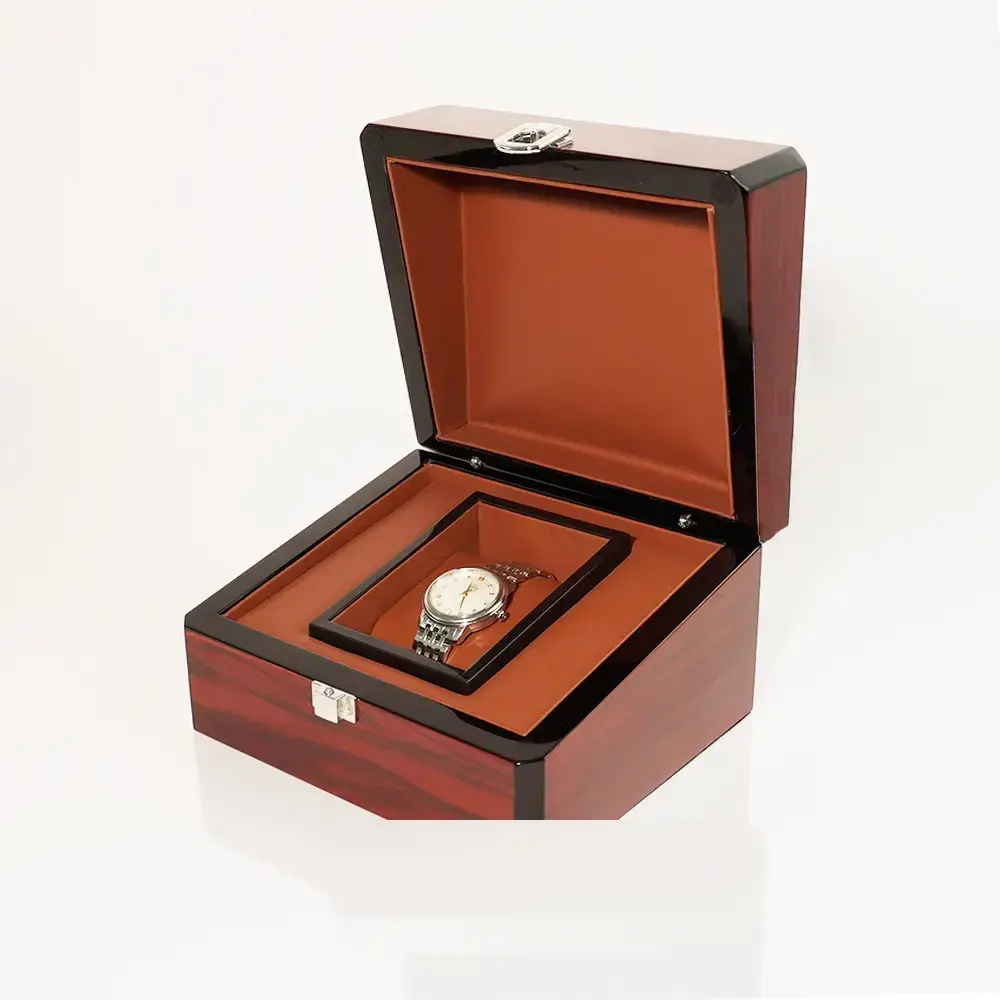
Brass or stainless hinges ensure longevity. Magnetic closures (800–1200 gauss) provide secure, wear-resistant closure. Soft-close hinges enhance perceived quality. Water-based finishes reduce VOC emissions. Recycled wood appeals to eco-conscious luxury brands.
5. Customization u0026 Decoration Options
Decoration methods transform a wooden jewelry box into a branded asset. Laser engraving, hot stamping, embossing, and screen printing each offer distinct cost, MOQ, and timeline tradeoffs. Your choice depends on volume and brand positioning.
Laser Engraving

Laser engraving achieves fine detail on wood with zero MOQ minimum and 5–7 day turnaround. Resolution to 1/1000 inch.nnCost per unit ranges $0.50–$3.00 depending on design complexity. No die investment required, ideal for luxury brands and quick launches.
Hot Stamping u0026 Embossing

Hot stamping applies metallic foil under heat and pressure. MOQ typically 50–100 units, with cost per unit dropping 40–60% at 500+ units due to die amortization.nnEmbossing (no foil) costs 30% less but offers subtle branding. Both deliver permanent finish.
Screen Printing u0026 Paint

Screen printing handles multi-color designs on interior linings and exterior panels. MOQ 100+ units, lead time 10–14 days, cost $1.00–$2.50 per piece.nnPaint customization (acrylic or lacquer) suits hand-painted effects; higher cost and longer curing time but maximum design freedom.
Interior u0026 Insert Customization
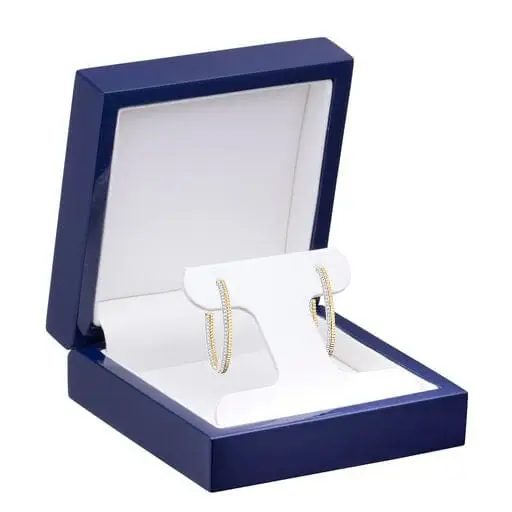
Personalize interior lining fabric (microfiber, velvet, satin) in 50+ colors and custom-molded inserts (foam, EVA, leather trays). Lining cost: $0.30–$1.20 per unit at 50+ MOQ.nnCustom insert dies run $200–$500; amortized over 500 units yields $0.40–$1.00 per unit.
6. Key Construction Quality Markers
Quality separation between budget and premium wooden jewelry box suppliers manifests in three core dimensions: mechanical durability, dimensional consistency, and interior finish longevity. These factors directly impact customer satisfaction and retail return rates across the first 12 months.
Hinge Systems And Durability

Hinge failure ranks among top defects in budget jewelry boxes. Full-length brass piano hinges rated 10,000+ cycles outperform 2-piece stamped hinges, which fatigue after 3,000 cycles. Premium suppliers stress-test hinges at 5,000–8,000 cycles before shipment; budget makers skip this critical step.
Closure Mechanisms
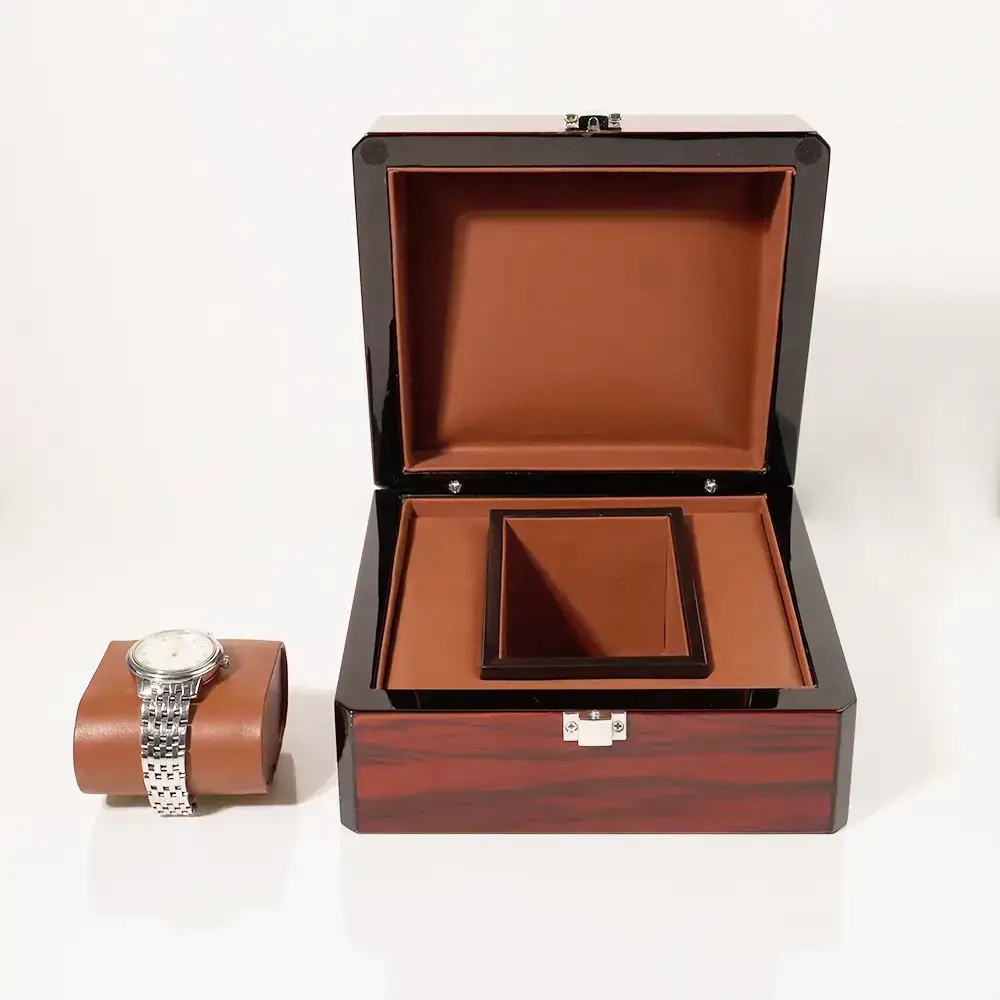
Magnetic closures require 600+ Gauss field strength to resist accidental opening during transit. Snap closures must engage at any lid position without pinch hazard. Latch-based systems risk wood warping if moisture drifts beyond 8–12% equilibrium. Always verify closure force and engagement specs in pre-production samples.
Wood Joinery Methods
Dovetail joints—traditional in luxury boxes—resist corner stress better than butt joints. Butt joints work for budget lines if glued with polyurethane or PVA and clamped 2+ hours. Visible gaps exceeding 1mm indicate inadequate pressure or dry adhesive application.
Dimensional Accuracy And Tolerances
±0.5mm tolerance maintains hinge-to-frame fit and lid-to-base alignment. Budget suppliers often work at ±1.5mm, causing sticky lids or rattling closure. Measure at least 5 points per box on first samples; variance exceeding 1mm signals inadequate tooling or inexperienced assembly crews.
Interior Finish And Durability

Velvet, microfiber, and satin linings should not shed fibers under a 30-second brush test. Glue bleed-through or moisture warping within 6 weeks signals poor adhesive choice or inadequate wood acclimation before assembly. Premium suppliers acclimate wood for 7–14 days in climate-controlled spaces.
7. How to Choose a Wooden Jewelry Box Manufacturer
Selecting the right wooden jewelry box manufacturer requires evaluating production capacity, quality certifications, customization flexibility, and communication reliability. Red flags like unrealistic timelines and vague specifications often signal manufacturing inexperience. Verification through samples and facility assessment protects your brand investment.
| Criteria | Reliable Supplier | Red Flag |
|---|---|---|
| Certifications | ISO 9001, FSC accredited | Undocumented or vague |
| Lead Time | 25–45 days for custom | Under 20 days promised |
| Sampling | 7–14 day turnaround, video inspection | Unavailable or delayed |
| MOQ | 50–500 units | Excessive or refuses to disclose |
| Communication | 24h response, dedicated account manager | Delayed or vague responses |
| QC Process | Multi-stage inspection, defect rates disclosed | No defined process |
Certifications u0026 Factory Standards
ISO 9001 and FSC accreditation verify manufacturing discipline and material sourcing.nnRequest current certificates and ask about batch testing, inspection protocols, and defect rates. Facilities with 100+ staff typically deliver more consistent results.
Customization Flexibility u0026 MOQs
Low MOQs (50–500 units) indicate supplier maturity and serve independent designers well.nnRequest specifications on wood species, dimensions, interior lining, and finishes. Suppliers offering 10+ customization options—hardware, engraving, velvet colors, magnetic closures—better match brand identity without excess tooling costs.
Quality Control u0026 Sampling
Reputable manufacturers deliver pre-production samples in 7–14 days via standard protocols.nnExamine first-article samples for finish, hinge durability, lining integrity, and joints. Multi-stage QC (material inspection, assembly checkpoints, final verification) and transparent defect reporting (max 2% rejection) signal reliability.
Red Flags u0026 Communication
Avoid suppliers quoting lead times under 20 days or unable to specify wood species, material grades, and finishes.nnVague responses on pricing or samples signal inexperience. Reliable manufacturers assign account managers, provide itemized quotes, respond within 24 hours, and document all specs in writing.
8. Common Mistakes Buyers Make
Most buyers encounter preventable friction when sourcing wooden jewelry boxes. Vague specs, late samples, and untested hardware cause costly revisions. Knowing these traps upfront saves time and money.
Unclear MOQ and Specifications
Wooden jewelry box MOQs typically start at 1,000–5,000 units, not 500. Vague specs—’mahogany’ without stain samples, ‘velvet’ without GSM—guarantee revisions.nnRequest exact Pantone references, textile weights, hardware finishes, and lining materials in your initial brief. A detailed spec sheet in week one prevents months of back-and-forth.
Late Sample Ordering
Ordering samples 4–6 weeks before production is too late. Lead times for materials, tooling, and QC run 8–12 weeks minimum.nnBegin sampling 12–16 weeks ahead of production launch. Test closures, hinges, and adhesion on prototypes. Defects caught early cost nothing; defects in finished boxes cost thousands.
Insufficient Closure Testing
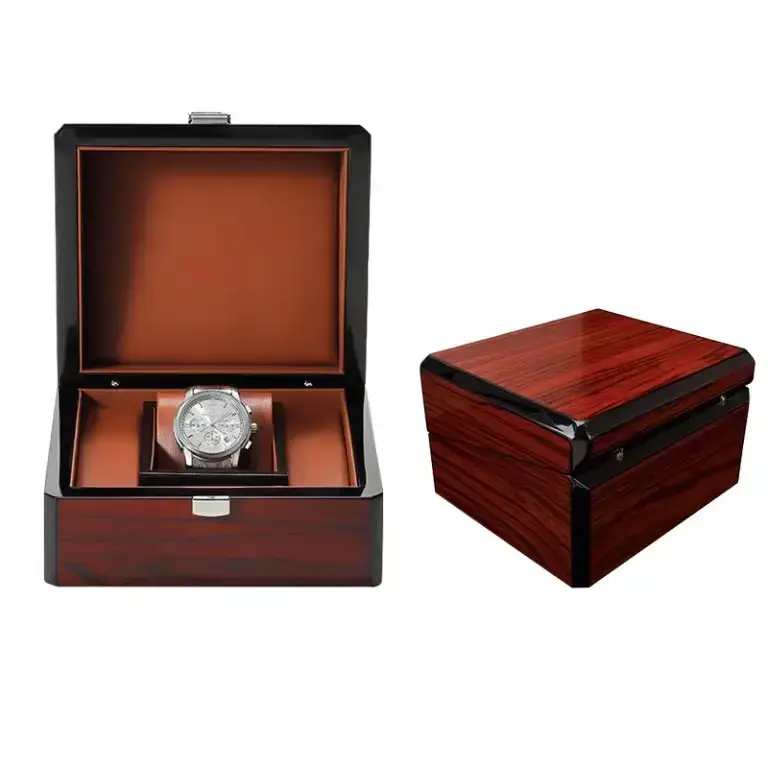
Weak magnetic closures rank as the top post-delivery complaint. Magnets must hold 2–3 lbs weight; hinges must survive 10,000+ cycles.nnInsist on documented load testing for every sample batch. A signed test report prevents disputes, warranty claims, and costly returns.
Interior Finish Inconsistencies

Lining color and adhesion often shift between samples and production runs. Specify lining weight (300 GSM velvet, not ‘soft’), confirm adhesive type, and request mid-production photos.nnVisual sign-off on 5–10 units midway through assembly prevents finish surprises and reduces rework at scale.
Missing Branding and Certifications
Budget for custom stamps, labels, or inserts from the start, not midway through production. Include logo placement, text depth, and foil finish in your brief.nnIf your market requires FSC or GOTS certification, confirm the supplier holds these before sampling. Verify in writing 14+ weeks before launch.
9. Steps to Launch Your Branded Wooden Jewelry Box
Launching a branded wooden jewelry box requires a structured eight-week to six-month process from concept to market. Success depends on clear specifications, rigorous iterative sampling, and defined quality checkpoints throughout manufacturing and final delivery to retail.
Define Specifications u0026 Request Samples
Outline material choices (solid wood species, plywood grades), external dimensions, interior finishes (velvet, microfiber, linen), hardware (hinges type, magnets, closure style), and branding placement (logo, text, embossing or debossing).nnRequest 3–5 samples from shortlisted manufacturers. Lead time: 10–21 days for first samples. Specify rush options (expedited fee 15–30% uplift) if needed.
Evaluate u0026 Refine Design
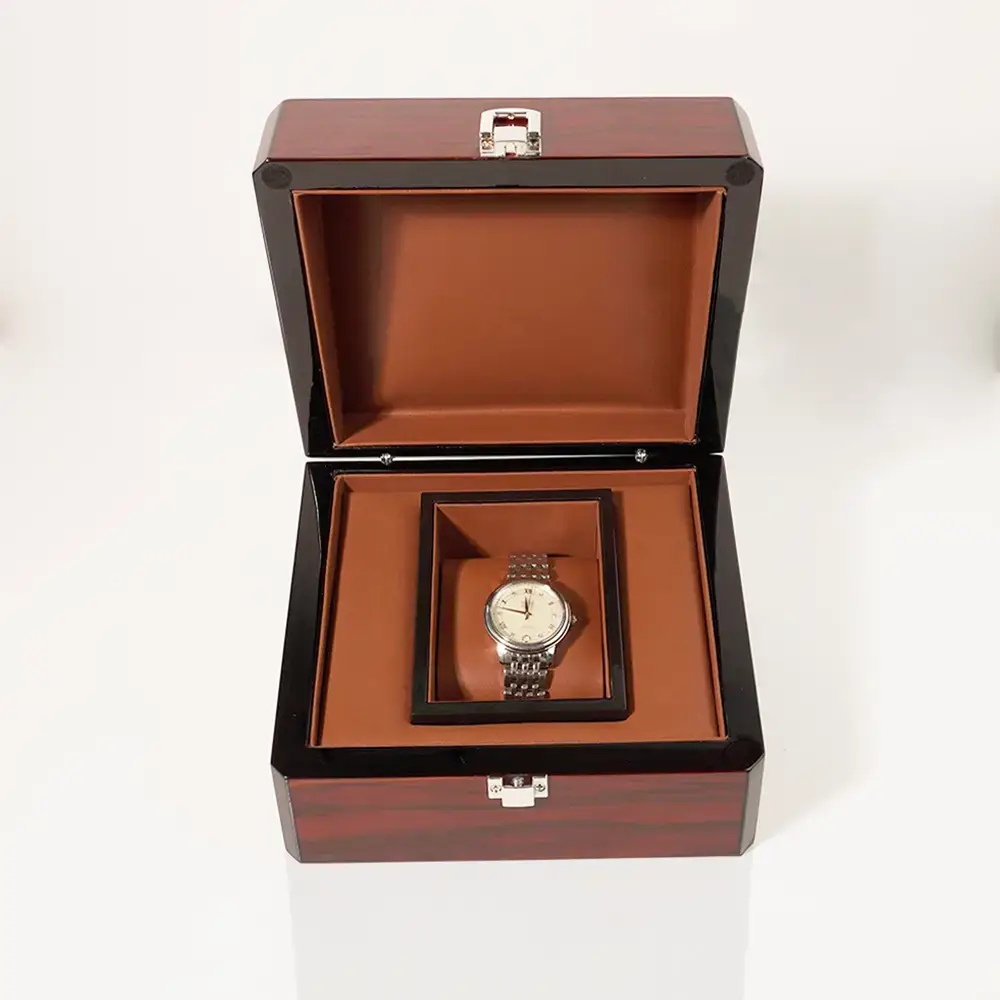
Assess joint precision, hinge smoothness, lid alignment, interior fit, and finish quality under inspection. Identify 2–3 design changes (material swap, sizing, hardware adjustment) for the manufacturer to address.nnExpect 2–3 revision rounds. Each iteration cycle: 7–14 days. Approve via detailed photos or on-site inspection; video walkthroughs reduce misalignment risk.
Finalize Artwork u0026 Commercial Terms
Submit final artwork (AI or PDF vector files, 300 DPI minimum), color specs (Pantone or RGB hex for digital mockups). Agree MOQ: typically 500–5000 units for custom wooden jewelry boxes, depending on complexity and customization level.nnLock pricing per unit (breakpoint at 1000, 2500, 5000 units) and payment terms (deposit 50%, balance COD or net 30). Confirm lead time: 35–60 days production plus shipping.
Production Planning u0026 QA Gates
Establish quality gates: pre-production sample sign-off, mid-run in-line inspection (visual, dimensional checks), and final inspection before packing. Arrange third-party QA audits if required by retail partners.nnSpecify defect tolerance (typically 2–3% for finish, less than 1% for structural defects). Build 5–10% buffer stock into MOQ for quality holds.
Logistics u0026 Market Launch Prep
Arrange shipping method (air 5–7 days, sea 20–35 days, consolidated LCL when MOQ under 5000 units). Plan product photography against finished samples, finalize e-commerce copy and retail marketing collateral.nnExecute soft launch (test with 1–2 key accounts) before full rollout to mitigate sizing or finish surprises.
10. Pricing u0026 Cost Structure
Per-unit costs range from $8.50–$18.00 at 100-unit minimums to $2.50–$6.00 at 5,000+ units, varying by wood species (birch, walnut, imported hardwoods) and finish type (natural oil, stain, lacquer); setup charges of $200–$500 apply to sub-500-unit orders. Lead times compress from 8 weeks to 3 weeks at scale, while customization options—interior lining, magnetic closures, LED lighting, compartments, premium hardware—add $1–$4 per unit.
| Quantity Tier | Price per Unit (Basic) | Price per Unit (Premium) | Lead Time |
|---|---|---|---|
| 100 units | $8.50–$12.00 | $14.00–$18.00 | 6–8 weeks |
| 500 units | $5.50–$7.50 | $9.00–$12.00 | 5–7 weeks |
| 1,000 units | $3.80–$5.20 | $6.50–$8.50 | 4–6 weeks |
| 5,000+ units | $2.50–$3.80 | $4.50–$6.00 | 3–5 weeks |
Start Your Wooden Jewelry Box Project Now
Factory-direct wooden jewelry box manufacturing with dedicated account managers, custom flexibility, and on-time delivery. Request samples and pricing today.